
Many businesses adopt AI with high expectations, only to feel disappointed a few months later. The tools are in place, subscriptions are paid for, yet very little has actually changed.
This usually happens for one simple reason: AI was added to a broken or unclear process.
AI does not fix chaos. It accelerates whatever already exists. When applied without structure, it amplifies inefficiency instead of removing it.
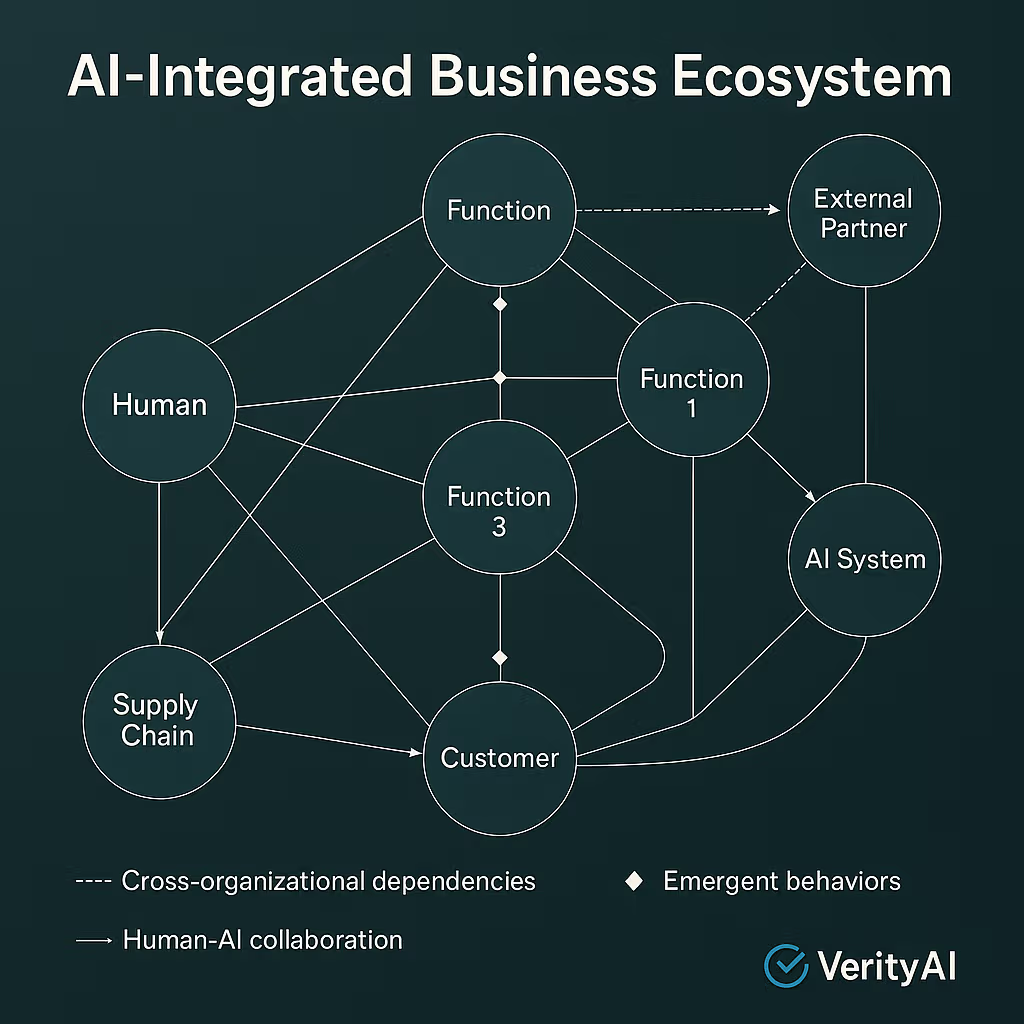
Successful AI adoption starts with systems thinking.
Why “Just Adding AI” Rarely Works
Businesses often approach AI backwards. They buy tools first and figure out how to use them later.
This leads to:
- Disconnected systems
- Duplicate work
- Conflicting data
- Frustrated staff
- Little measurable return
AI needs context to be effective. Without clear workflows, it has nothing reliable to optimise.
Tools vs Systems: The Critical Difference
A tool performs a single function.
A system connects multiple functions into a repeatable process.
For example:
- A chatbot is a tool
- A customer support workflow is a system
AI delivers value when it is embedded into systems, not bolted on as isolated tools.
The Three Layers Every AI-Driven Business Needs
Effective AI implementation sits on three foundational layers.
The first layer is data.
If your data is inconsistent, duplicated, or scattered across platforms, AI outputs will be unreliable. Clean, centralised data is non-negotiable.
The second layer is process.
Every task should have a clear start, decision point, and outcome. AI cannot optimise what is undefined.
The third layer is automation.
Only once data and processes are stable should AI be introduced to automate, assist, or enhance decisions.
Skipping layers is the fastest way to waste money.
Mapping Workflows Before Applying AI
Before automation begins, businesses should clearly answer:
- Where does information come from?
- Who touches it and why?
- What decisions are made?
- What triggers the next action?
This exercise often reveals inefficiencies that can be fixed without AI at all.
AI is most powerful once these improvements are already in place.
Choosing the Right Automation Points
Not every task should be automated.
AI works best where:
- Tasks are repetitive
- Decisions follow patterns
- Volume is high
- Speed matters
- Human error is costly
Tasks requiring empathy, negotiation, or strategic judgment should remain human-led, supported by AI insights rather than replaced.
Measuring ROI the Right Way
AI success should not be measured by novelty.
Instead, track:
- Time saved per task
- Reduction in operational cost
- Faster response times
- Fewer errors
- Improved customer satisfaction
If AI is not improving at least one of these, it is not doing its job.
Why This Approach Scales
Businesses that apply systems thinking to AI gain long-term advantages:
- New automations can be added easily
- Staff adoption improves
- Data becomes more valuable over time
- Costs remain controlled
AI becomes part of operations, not a recurring experiment.
Doing It Right from Day One
The most successful AI projects start small, stay focused, and scale deliberately. They are designed around the business, not around tools.
That is the difference between automation that looks impressive and automation that actually works.
At CPH Solutions, we help businesses design AI systems that fit their operations, integrate with existing tools, and deliver measurable results from the start.
If you want AI that works quietly in the background and delivers real operational impact, the foundation matters.